Bad weather can be murder

What happens when a civilian is conscripted into police work?

On 13 March 2011 Kristine Constantino phoned the California Highway PAtrol from her home in Kettenpom, California.  She whispered “help me” and that she lived at the end of the Kettenpom airstrip.  The dispatcher formed the impression that she was trying to avoid being overheard.  The message was passed to the dispatcher of Trinity County Sheriff’s Office, who tried to call Constantino without success.  The call for help was passed to the Office’s Corporal Ron Whitman.
skyrichardsonandkristineconstantinorogueriver201012
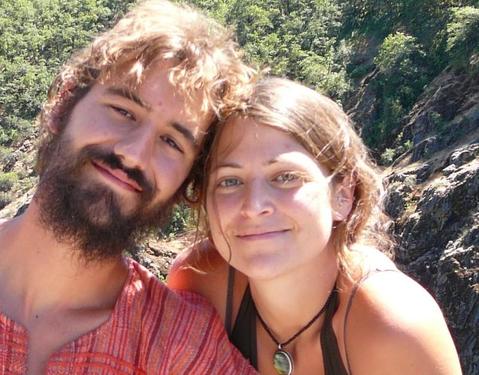
Christopher Richardson and Kristine Contantino (Image from here)

Apparently because Kettenpom is a remote town, Whitman called Norma Gund who lived near the airfield.  He asked her to do a welfare-check on Constantino.  He said that Constantino has called 911 for help, which probably related to bad weather.  He did not advise her that the caller was whispering or trying not to be overheard.  Gund and her husband went to Constantino’s home.  Constantino and her partner Christopher Richardson had immediately before been murdered by Tomas Gouverneur, who was still at the scene and attacked the Gunds, causing significant injuries (the full sequence of events is detailed in an article from radio station KMUD).

The Gunds sued Trinity County as Whitman’s employer.  Thye alleged that he had negligently misrepresented that the call for help was likely weather related and did not suggest a crime in progress.  The County applied to dismiss the claim  On the grounds that the Gunds’ only remedy was in workers’ compensation: Labour Code §3602.  California’s Labour Code §3366 provides that:

… each person engaged in the performance of active law enforcement service as part of the posse comitatus or power of the county, and each person … engaged in assisting any peace officer in active law enforcement service at the request of such peace officer, is deemed to be an employee of the public entity that he or she is serving or assisting in the enforcement of the law, and is entitled to receive compensation from the public entity in accordance with the provisions of this division.

The trial court agreed and dismissed the claim: Gund v County of Trinity (Trinity County Superior Court, Scheuler J, 27 April 2014, unreported).  The Gunds appealed.

The trial court’s decision was affirmed by the Third District Court of Appeal.  The Court noted that if Corporal Whitman had responded to Constantino’s call for unspecified ‘help’, he would have been engaged in active law enforcement because

any 911 call seeking unspecified help presents a risk of criminal activity.  Since the deputy would have been engaged in active law enforcement had he responded, plaintiffs were engaged in active law enforcement when they responded to the 911 call on his behalf — regardless of the deputy’s misrepresentations to plaintiffs that the call was likely weather-related and omission of facts that the caller whispered for help, was disconnected, and did not answer a return call. Even though plaintiffs were unaware of the facts suggesting potential criminal activity and felt lulled into a false sense of security by the deputy’s misrepresentations and omissions, plaintiffs still knew they were responding to a 911 call for help, the nature of which was not certain.

It followed that §3366 applied.  Because the Gunds could claim workers compensation, they had no common law damages claim.

Gund v County of Trinity (2018) __ Cal.App.4th __.

How not to solve housemate issues

We’ve all had that housemate: the one who’s never adjusted to the fact that their mother isn’t there to clean up after them. It’s still not a good idea to go Jackie Chan on them.

dirty_dishes
Image from here

On 2 August 2017 a 32 year old man from Portland, Australia, locked a housemate out of their dwelling.  When the housemate arrived home at 3:30am, the offender began to berate them over uncompleted chores, finally pushing them onto a bed and slapping them.  He was charged with recklessly causing injury (Crimes Act 1958 (Vic.), §18):

A person who, without lawful excuse, … recklessly causes injury to another person is guilty of an indictable offence. Penalty: … If the injury was caused recklessly—level 6 imprisonment (5 years maximum).

The offender pleaded guilty in Portland Magistrates Court.  Toose M fined him $1,000.00.

Police v King (2018) Portland Observer & Guardian, 2 May 2018, p.5.

Courtside Coffee

Because it’s Friday, it’s a good time for a lighter post.

I was in the County Court a couple of days this week in a workers compensation matter. The morning of the first day was rather busy. How busy? It was 1pm when I finally had my first cup of coffee of the day (headaches were starting).

County Court, Melbourne

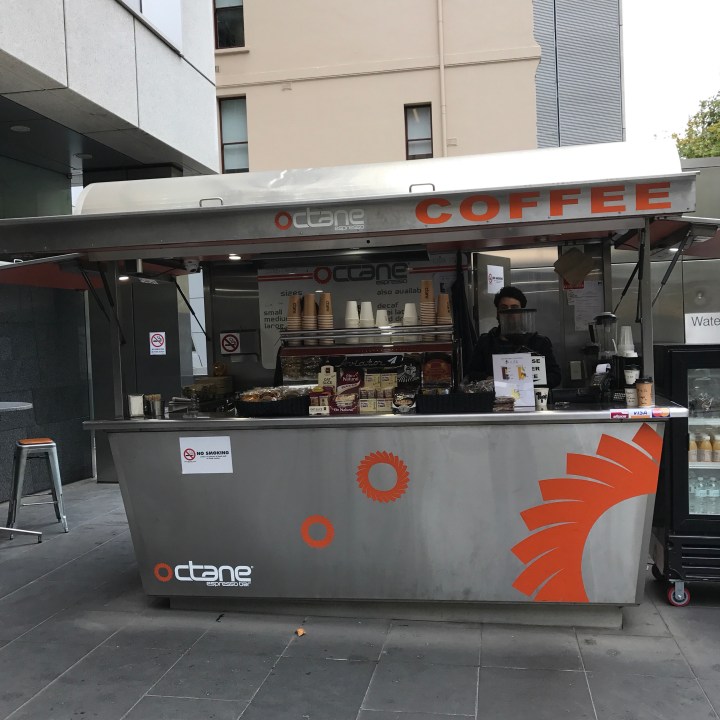
There was, however, a consolation. The forecourt of the County Court contains the Octane Coffee stand. It doesn’t look like much, but the coffee is always first class and served quickly. The hot chocolate is a particular highlight: some of the best I’ve ever had in Melbourne.

Octane Coffee, Melbourne
Octane Espresso, Melbourne

My dog-walking, real-estating friend Allie recently blogged about her delight at being able to drink Dunkin’ Donuts coffee again.  Anyway, it crossed my mind that most lawyers probably have a preferred courtside pit stop, where they can get a strong coffee or a soothing cup of tea for a stressed client. So lawyers, tell us what your court area haven is?

Gatecrasher gets crashed!

In case you’re wondering, simply being in uniform won’t get you immunity.

Seal_of_the_Honolulu_Police_Department

On 31 December 2009 Dillon Bracken gatecrashed a party at a hotel in Honolulu.  Kinchung Chung, a police officer, had been hired by the venue as a “special duty officer”.  While he wore his uniform and this work was approved by the police department, he was paid by the hotel directly and was considered to be off-duty from the police force.  Chung and a number of bouncers confronted Bracken.  A scuffle broke out between Bracken and the bouncers (not including Chung) in which Bracken was injured.

Bracken sued Chung for violating his rights to due process by failing to intervene and stop the alleged assault by the bouncers.

Every person who, under color of any [law] … of any State … subjects, or causes to be subjected, any … person within the jurisdiction thereof to the deprivation of any rights, privileges, or immunities secured by the Constitution and laws, shall be liable to the party injured … for redress: 42 USC §1983.

The US District Court dismissed the claim, finding that Chung was immune from suit and the claim in any event lacked merit.  Bracken appealed.

The appeal was upheld by the Ninth Circuit Court of Appeals.  It was accepted that Chung acted under colour of State law by invoking the authority of his uniform and badge.  However, he was not entitled to immunity from suit: There was no tradition of immunity for off-duty police acting as private security guards.  He was not carrying out public duties or doing the work of government [although one may wonder, then, why the Honolulu Police Department allowed “special duty” policing in the first place].

The Court of Appeal also considered that Bracken’s claim had merit.  While in general the State was not liable for failing to prevent a person coming to harm, a police officer was obliged to intervene where he had placed a person in danger.  Here, although it was foreseeable that Bracken would be injured by the bouncers, Chung had prevented him leaving.

The case was returned to the District Court for further proceedings.

Bracken v Chung (2018), Ninth Circuit Court of Appeals, 23 August 2017

Who are you working for?

Frank Benedetti was employed by Schlumberger Technology Corporation. Pursuant to that employment he worked on an oil well owned and operated by Cimarex Energy Company. On 9 December 2013 he was injured in a work accident. He sued Cimarex in the Canadian County District Court.

oilfield
Image from here

Cimarex as well operator was considered to be immune from suit. The Oklahoma Workers Compensation Code [85 OS 2011 §302(A) and (H)] relevantly provided that –

The liability prescribed in this act shall be exclusive and in place of all other liability of the employer … at common law … for such injury … to the employee … except … where the employer has failed to secure the payment of compensation for the injured employee.

For the purpose of extending the immunity of this section, any operator or owner of an oil or gas well … shall be deemed to be an … employer for services performed at a drill site or location with respect to injured … workers whose immediate employer was hired by such operator or owner at the time of such injury.

The District Court summarily dismissed Benedetti’s claim. His appeal to the Court of Civil Appeals was dismissed. He appealed to the Supreme Court of Oklahoma.

The Supreme Court upheld his appeal. Following Strickland v Stephens Production Co., 2018 OK 6 it found that paragraph (H) was an unconstitutional “special law” breaching Art. 5 §59 of the Oklahoma Constitution

Laws of a general nature shall have a uniform operation throughout the State, and where a general law can be made applicable, no special law shall be enacted.

The case was remanded for further proceedings in the District Court.

Benedetti v Cimarex Energy Co, 2001 OK 21

Dr Judge, I presume?

Most personal injury practitioners see a string of radiological records in every case. A recent decision from the US Seventh Circuit is a reminder of the hazards of reading them without adequate training.

MRI meme
Image from here

Ms Akin applied for Supplemental Security Income. She alleged that she became disabled in 2011 as a result of fibromyalgia, back and neck pain and headaches. She saw a number of treating doctors and underwent an MRI. She was also assessed by two medicolegal examiners. The latter concluded that she was fit for sedentary work. Her claim was rejected by the Commissioner of Social Security. She appealed to an Administrative Law Judge (ALJ). The ALJ preferred the opinions of the medicolegal examiners and found that Ms Akin was not disabled because she was fit for sedentary work. The ALJ also said that the MRI scans (which the examiners had not seen) were consistent with Akin’s impairments but did not support her allegations of pain.

Ms Akin appealed to the US District Court which upheld the decision. She appealed to the United States Court of Appeals for the Seventh Circuit. Her appeal was upheld. The Court considered that –

… the ALJ’s evaluation of Akin’s MRI results is flawed because the ALJ impermissibly “played doctor.” … The ALJ stated that the MRI results were “consistent” with Akin’s impairments and then based his assessment of her residual functional capacity “after considering … the recent MRIs.” But, without an expert opinion interpreting the MRI results … the ALJ was not qualified to conclude that the MRI results were “consistent” with his assessment.

The ALJ’s decision was vacated and the matter remanded for further proceedings.

Akin v Berryhill (2018), US Court of Appeals for the Seventh Circuit, 4 April 2018.

Nothing to See Here

Interesting decision out of Texas on the subject of video surveillance.

surveillance
Image from here


A worker suffered a back injury while working on an oil rig in January 2008.  He sued his employer under the Jones Act alleging negligence and supply of an unseaworthy vessel.  Four years and two spinal surgeries later he was placed under surveillance by his employer and filmed for about an hour performing a range of outdoor activities.

At trial the Harris County District Court considered the footage inadmissible without viewing it.  The jury found for the plaintiff.  On appeal the decision to exclude the footage was upheld. The employer appealed to the Supreme Court of Texas.

The Supreme Court found that the trial judge had erred.  A trial court could not properly exercise its discretion to exclude without viewing it.

We hold that, as a general rule, a trial court should view video evidence before ruling on admissibility when the contents of the video are at issue. We recognize circumstances might arise where viewing is unnecessary or extremely onerous. For example, “[t]here may be cases where the probative value of the evidence is so minimal that it will be obvious to the court that the potential prejudice . . . substantially outweighs any probative value the evidence might have.” Additionally, video depositions need not be viewed before ruling on objections unless the objection is specific to a visual aspect of the deposition. Exigencies of trial, moreover, could make it difficult to find time to view a late-offered video, especially if the video is lengthy. The parties could potentially address such timing issues by submitting representative excerpts for the trial court’s review. In any event, trial courts should “undertake their best efforts in attempting to view the subject visual recording prior to ruling on its admissibility.” Exceptions should be few and far between.

A new trial was ordered.

Diamond Offshore Services Ltd v Williams (Supreme Court of Texas, 2 March 2018)

Grebing v 24 Hour Fitness USA, Inc (2015) H&FLR 2015-21

Timothy Grebing v 24 Hour Fitness USA, Inc (2015) H&FLR 2015-21

California Court of Appeal (Second District)

29 January 2015

Coram: Kitching PJ, Lavin and Aldrich JJ

Appearing for the Plaintiff: Charles R. Grebing, Andrew A. Servais, and Dwayne H. Stein (of Wingert Grebing Brubaker & Juskie)
Appearing for the Defendant: Jack C. Nick and Robert R. Willis (of Prindle, Amaro, Goetz, Hillyard, Barnes & Reinholtz)

Catchwords: California – personal injury – faulty machine – waiver – negligence – product liability

Facts: The plaintiff was injured on 9 May 2012 while using a “low row” weight training machine at the defendant’s “24 Hour Fitness” club in La Mirada.  The clip securing the handlebar of the machine gave way, causing the plaintiff to suffer injuries to his head, back and neck.  The defendant conceded that the machine had been fitted with the wrong clip.

The plaintiff brought proceedings against the defendant for negligence, negligent products liability, strict products liability and breach of the implied warranty of merchantability.  The defendant sought and was granted summary dismissal of the proceeding based on the release signed by the plaintiff, relieving the defendant of liability for injury resulting from the negligence by it or anyone acting on its behalf: Grebing v 24 Hour Fitness USA, Inc (L.A. Co. Sup. Ct, Jessner J, 28 February 2014, unreported).  The plaintiff appealed.

Held: Per curiam, dismissing the appeal, that –

1. A release of liability for future negligence will be valid, unless it is barred by statute or is against the public interest.  The public interest is not generally considered to be impaired by releases relating to exercise facilities or recreational sport.

Tunkl v Regents of University of California (1963) 60 Cal.2d 92 and Capri v L.A. Fitness International LLC (2006) 136 Cal.App.4th 1078, followed.

2. A release of liability for future gross negligence will generally be considered unenforceable as a mater of public policy.  Gross negligence is considered to be an extreme departure from ordinary standards, or a “want of even scant care”.  The available evidence did not suggest the presence of gross negligence.

City of Santa Barbara v Superior Court (2007) 41 Cal.4th 747, followed.

3. The release covered the risk of defective maintenance or assembly of exercise equipment because this risk was reasonably related to use of the facility and equipment.

Leon v Family Fitness Center (#107), Inc. (1998) 61 Cal.App.4th 1227, followed.

4. The plaintiff’s claim based on product liability was defective.  A defendant is not liable in products liability if the dominant purpose of the transaction with the plaintiff is provision of services rather than a product, which was the case given the services supplied.

Ontiveros v 24 Hour Fitness USA Inc (2008) 169 Cal.App.4th 424

Judgment

The Court’s judgment is available here.

Advertisement

Heather ad March 2015

Mohr v Yamaha Motor Co. Ltd (2013) H&FLR 2015-13

Dennis Mohr v Yamaha Motor Co. Ltd (2013) H&FLR 2015-13

Superior Court of New Jersey (Appellate Division)

19 July 2013

Coram: Reisner, Yannotti and Harris JJ.

Appearing for the Plaintiff: Herbert Korn, Robert Westreich and William Reutelhuber (of Herbert M Korn PC)
Appearing for the Defendant: Robert Kelly, Christen Moffa, Jason Schmitz and Christine Delany (of Littleton Joyce Ughetta Park & Kelly)

Catchwords: New Jersey – personal injury – product liability – failure to warn – defective product – misuse

Facts: The plaintiff was a recreational rider of snowmobiles.  On 5 February 2005 he was at he home of a friend in upstate New York and borrowed a snowmobile (manufactured by the defendant) belonging to that friend.  He noticed that it was running erratically and concluded that it had a fouled sparkplug.  In an attempt to clear the sparkplug the plaintiff and another man lifted the rear of the snowmobile by a handle attached to the back of the machine while a third man revved the engine (“the process”).  During this process the snowmobile’s track broke and flew backwards, severely injuring the plaintiff’s leg.  The leg was ultimately amputated.

At trial there was considerable lay evidence that the process was commonly used among snowmobilers in order to clear sparkplugs.  However, the machine’s owner’s manual contained warnings against standing behind the snowmobile or lifting its rear while the engine was running. It was not known whether the manual had been available to the plaintiff (let alone read by him) on the day of the accident.  New Jersey’s Product Liability Act provides that a manufacturer –

… shall be liable in a product liability action only if the claimant proves by a preponderance of the evidence that the product causing the harm was not reasonably … safe for its intended purpose because it … failed to contain adequate warnings or instructions (1)

The plaintiff brought proceedings against the defendant in the Superior Court of New Jersey on the basis that the snowmobile had a design defect and that the defendant had provided an inadequate warning against lifting the machine while it was running.  A jury upheld the claim based on failure to warn and damages of approximately $2,500,000.00 were awarded: Mohr v Yamaha Motor Co Ltd (2011), Daily Record, 14 April 2011.  The defendant appealed.

Held: Dismissing the appeal, that –

1. In proving that a product was dangerous and required a warning, a plaintiff is required to address the issue of product misuse, either by showing that there was no misuse or that the misuse that occurred would have been foreseeable to a reasonably prudent manufacturer.

Johansen v Makita USA Inc, 128 NJ 86, 607 A.2d 637 (1992); Cepeda v Cumberland Engineering Co, 76 NJ 152, 386 A.2d 816 (1978); Jurado v Western Gear Works, 131 NJ 375, 619 A.2d 1312 (1993); and Ridenour v Bat Em Out, 309 NJ Super 634 (App. Div. 1998), followed.

2. It was effectively conceded that the plaintiff had misused the snowmobile but that the misuse was foreseeable.  Accordingly the real issue for the jury was whether it was sufficient for the manufacturer to place a warning about the relevant risk of injury only in the owner’s manual, or whether a waning should have been affixed to the snowmobile itself.  On the evidence it was amply open to the jury to find that the defendant had provided an inadequate warning.

3. Obiter, A user’s modification of a product will not relieve a manufacturer of liability for a defective product if the defect remains a contributing proximate cause of the accident or the modification was foreseeable.

Soler v Castmaster, 98 NJ 137, 484 A.2d 1225 (1984) and Butler v PPG Industries Inc, 201 NJ Super 558, 493 A.2d 619 (App. Div. 1985), approved.

Judgment

The Court’s judgment is available here.

========================================================

(1) N.J.S.A., 2A:58C-2(b).

Advertisement

Vote%201%20ORP%20poster%20A3

Avery v Cobra Enterprises of Utah Inc (2013) H&FLR 2015-12

James Avery v Cobra Enterprises of Utah Inc (2013) H&FLR 2015-12

United States District Court (Northern Dist. of Alabama)

23 May 2013

Coram: Acker J.

Appearing for the Plaintiffs: Steven Nichols and Shay Samples (both of Hare Wynn, Newell & Newton)
Appearing for the Defendant: Hobart Arnold and James Porter (both of Porter, Porter and Hassinger), Jeffrey Malsch and Anthony Pisciotti (both of Pisciotti, Malsch & Buckley) and David Welborn.

Catchwords: Alabama – tort – firearms – personal injury – product liability – merchantability

Facts: The plaintiff (James Avery) was the owner of a Cobra Model C32 derringer handgun (made by the defendant), which he had been given in around 2004.  He was experienced in using and handling firearms and routinely carried the gun in anticipation of using it for self defence.  In order to be able to use it for this purpose without delay, he customarily carried it without engaging the safety catches.

On 10 February 2010 the plaintiff was carrying the gun in his hands along with a number of other items including soft drink bottles.  As he attempted to throw the empty bottles in a rubbish bin, he dropped the gun, which discharged and shot him in the abdomen.

The plaintiff brought proceedings against the defendant, seeking damages for (as relevant here) breach of an implied warranty of merchantability.  The defendant sought summary dismissal of the claim.

Held: Denying the defendant’s application, that –

1. A claim based on breach of an implied warranty of merchantability can be brought to seek compensation for injury caused by an unreasonable dangerous product.  It is not dependent on (in particular) also having a connected claim under the Alabama Extended Manufacturer’s Liability Doctrine.

Spain v Brown & Williamson Tobacco Corp., 872 So.2d 101 (Ala. 2003), followed.

2. In order to claim for breach of an implied warranty a plaintiff must show that there was such a warranty, that it was breached, and that the breach proximately caused harm.

Storey v Day Heating and Air Conditioning Co., 319 So.2d 279 (Ala. Civ. App. 1975) and Barrington Corp. v Patrick Lumbar Co. Inc., 447 So.2d 785 (Ala. Civ. App. 1984), followed.

2(a). Alabama Code §7-2-314(1) implies a warranty of merchantability of goods into a contract for their sale if the vendor is a merchant with respect to goods of that sort.  A manufacturer can be considered to be such a merchant, despite not having a direct contractual relationship with an injured person, if that person was injured and it was reasonable to expect that they would use the goods in question (1).

Bishop v Sales, 336 So.2d 1340 (Ala. 1976), followed
Ex Parte General Motors Corp., 769 So.2d 903 (Ala. 1999), distinguished.

2(b). Alabama Code §7-2-314 lists a number of conditions for goods to be considered merchantable, including that the goods are fit for the ordinary purposes for which goods of that type are used.  It is a jury question whether (a) self-defence is an ordinary use of a derringer-type handgun, and (b) whether it would therefore be normal to carry it with the safety features unused, such that (c) for the gun to be merchantable it should not fire when dropped with the safety off.

2(c). It is a question for a jury whether any particular event is a proximate cause of a plaintiff’s injury.

Judgment

The Court’s judgment is available here.

===========================================

(1) This type of relationship seems indistinguishable from the test for manufacturer’s liability established in the classic case of Donoghue v Stevenson [1932] A.C. 562 (U.K. 1932)

Advertisement

SFP_2015